**Welcome to the Spring Fling Giveaway Hop**
Blurb
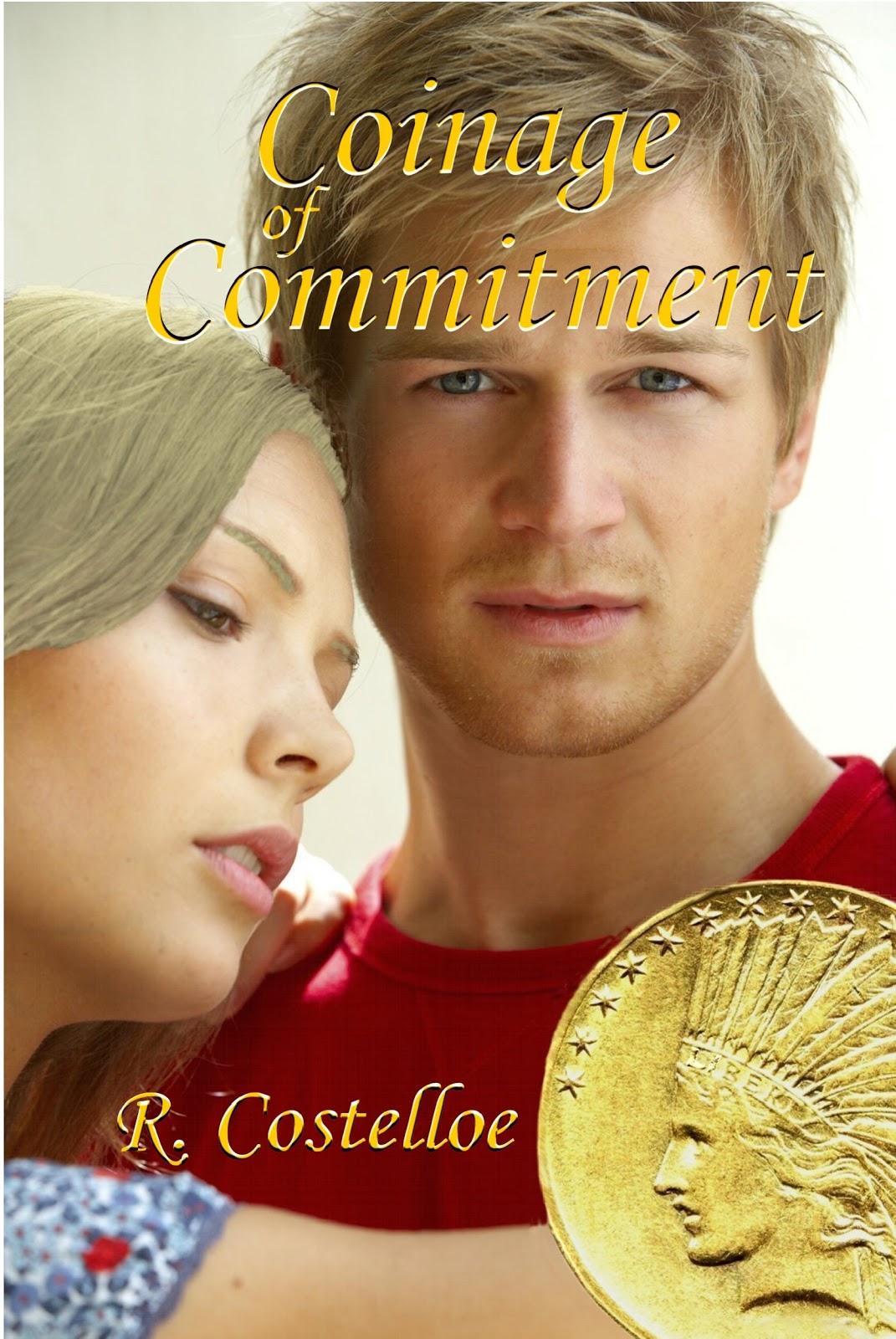
Wayne and Nancy grow up on opposite sides of the country, each certain they must have love better than what others will settle for. Something stronger, something richer, something worth searching for. During the turbulent nineteen-sixties, they meet while he is attending blue-collar Drexel, and she is at neighboring, Ivy League Penn. Although irresistibly drawn to each other, they must overcome obstacles posed by the class and social differences separating them, as well as opposition from both families, and later, a twist of fate that will be the cruelest test of all. Can they reach the emotional heights they seek? Can they overcome time's downward pulling inertia? Coinage of Commitment is dedicated to all who ever paused and wondered about the altitude love might soar to.
And from Barnes & Noble
More blog hop stops are listed below. and don't forget to enter the Giveaway.
a Rafflecopter giveaway
Actually, the title of this post is an understatement. I was more than surprised. So let me explain. In 2007, Saga Books print published my first novel, Coinage of Commitment. The book sold well, considering that Saga is a small independent, and I had to self-power all the promo. When it finaled in the National Indie Excellence 2008 Book Awards, I naively assumed the distinction would help me get my second title, Pocket Piece Cameo, published by a major. It didn’t, and the book was eventually published by Saga in November of 2008. My experience with Cameo was disheartening and, since I was blocked on plotting a third novel, I decided to quit fiction writing.
But I hated the thought of letting all those writing skills atrophy. Looking around at volunteer opportunities, I thought maybe contest judging might be a way to preserve my skills, at least partially. Plus I’d be learning a new skill; plus I’d be giving back to the writing community I’d been a part of since 2005.
I took a course given by the Iowa RWA, and gave judging a try. It turned out to be a good fit. The RWA chapter contests were always eager for trained judges—especially those who were authors—and I enjoyed the work. Well, this is one of those endeavors where responding well earns you requests for more work. By the end of 2011, I had judged more than twenty contests that year. I did a tally, and figured I had spent something in the range of 800-1000 hours judging that year. In case you’re wondering, that’s nearly equivalent to a twenty hour a week job.
I planned to continue judging at a high pace, but then something profound happened in the spring of 2012. I came to the surprise realization that my writing skills were actually higher than they were in 2008. Unexpected, to be sure, and hard to believe, at first, but the verification was in the level of judging I was doing and documenting. Well, this revelation collided head-on with a special quality inherent to Coinage of Commitment. Because from a writer's standpoint, Coinage is a perfect storm of a story, with so many of the character and plot elements harmonizing to form a kind of narrative synergy. One that's rare. Now, perhaps there are writers gifted enough to consistently produce such stories by their own creative flux, but I am not one of them. I’ve written three novels—not all that many—but enough to teach me that Coinage's magic is one of the profoundest gifts I've ever stumbled upon--although I will take credit for the surprise ending. So when I turned around and realized my writing had reached a new...maturity, I knew almost immediately I would rewrite Coinage. Cameo too, but it was never the driver. If I'd been given the wherewithal to take a book that was already a perfect storm of a story, one that finaled in a national contest, and rewrite it into something substantially better, then the effort was mandatory.
But of course the effort turned out to be more than I bargained for. It took seven months of full-time work to rewrite both books to the limit of my new skills. The digital editions were professionally formatted, and they went up on Amazon in January of this year.
The bottom line message is that if you’re looking to improve your writing, contest judging may be worth considering.
I got this question from a fellow author and blogger, and it made me think. Yes, authors do tend to define who they are and what they think and believe in their writing. How can they avoid it? Well, I guess they could avoid it if they tried. Reporters of yesteryear tried hard to write so that their views were invisible. But today, unless you're writing formula fiction, you are probably defining yourself in your writing, at least to a certain extent.
My approach to writing romance fiction starts with a proposition. Or I guess it’s really a question. Wouldn’t it be a nicer world if people could remain enthusiastic about the romantic commitment they’ve chosen to fill the rest of their lives? No, I’m not talking about those breathtaking days of courtship. Everyone is in heaven at that brief stage. And I’m not referring to the months after marriage or move-in that define the “honeymoon” period. Rather I’m talking about after that, after parenting and career pressures pulverize so many married romances into a mush that’s humdrum at best, uptight or failing at worst. What if you had characters who look around at the average for relationships in our culture and decide they want something better? They want something better for the courtship period, yes, something stronger, something higher than what others will settle for. Plus they want it to go on being better; they want it to stay vibrant for decades after marriage, instead of just months. Well, even in fiction, mere wishing won’t do it. Our characters are going to have to do something different than the rest of us, otherwise they’ll end up with the same humdrum outcome. They’re going to have to plan for what they want. In order to make love better and longer lasting, they’re going to have to understand its nature: what can make it better, what will make it fall short?
But analyzing and understanding love’s potential is only the starting challenge for our characters. For if they’re smart enough, they’ll realize that the stratospheric love they yearn for is not going to be feasible with just anyone. No, it’s only going to be possible with someone who shares the same dream, who’s willing to plan and sacrifice and work for it just as hard. How do you find such a soul mate? How do you verify that it’s really them? This process of searching and refining is the point where the plot possibilities get really interesting. Now if you add to the plot mix a love triangle of epic drama, one featuring rival paths to the stratospheric love we are seeking, and if you bring that triangle through a surprise ending of shattering impact, one both unique and cathartic, then we should have the potential for a very special story indeed. And unlocking that exact story potential is what I’ve tried to achieve in the second edition of my novel, Coinage of Commitment.
This post originally appeared on Books, Books, the Magical Fruit on 3/26.
My books feature characters who want more from love that what they see all around them. Something stronger, something higher, something worth pursuing. Part of that pursuit is usually an effort to understand love. We can’t make it soar higher or make it last longer unless we figure out how it works and what can harm it. This usually means the characters need to take a thinking as well as an emotional journey to attain the emotional altitude they seek. And this opens up all sorts of plot opportunities to explore. But regardless of the type of romance being composed, writing love stories requires the author to analyze the different types of emotions that blend together to define a relationship. Every relationship is unique, so the blend of emotions is just as unique.
I’ve always been fascinated that certain motivations in that possible blend of romantic feelings get discounted because they’re thought inferior or contaminating. Marrying for money probably tops the list and, from a qualitative standpoint, is probably one that most readers would agree on. But gratitude is another attribute often named as invalidating the integrity of a relationship. “She only married him out of gratitude,” is heard from the TV soap opera as a signal that the romance is facing certain doom in future episodes.
But does gratitude really deserve such a bad rap? We may want to take another look, because gratitude can be viewed as verification from the past that a lover can be counted on in the future. Yes, I think gratitude creates faith in its object for a victorious future. And gratitude is often the very basis for our best romantic memories.
In fact, I think it’s fair to turn the question completely around. Can any successful relationship that’s mature function without it? Can you show me a successful relationship where the lovers are not grateful to each other, and in manifold ways? If your lover takes care of many little things that matter to you, isn’t that something to be grateful for? And isn’t that gratitude bound to feed the relationship in a way that will make it richer and deeper? I see mainly good things coming out of a relationship that’s laced with gratitude. And the more, the better. Show me a relationship that’s healthy and vibrant, and I’ll show you lovers who have grateful memories.
Blurb
Wayne and Nancy grow up on opposite sides of the country, each certain they must have love better than what others will settle for. Something stronger, something richer, something worth searching for. During the turbulent nineteen-sixties, they meet while he is attending blue-collar Drexel, and she is at neighboring, Ivy League Penn. Although irresistibly drawn to each other, they must overcome obstacles posed by the class and social differences separating them, as well as opposition from both families, and later, a twist of fate that will be the cruelest test of all. Can they reach the emotional heights they seek? Can they overcome time's downward pulling inertia? Coinage of Commitment is dedicated to all who ever paused and wondered about the altitude love might soar to.
Available from Amazon
More Blog Hop stops are listed below. And don't forget to enter the Giveaway.
a Rafflecopter giveaway
Here's a post I did for Laurie's Thoughts and Reviews.
What are your ten favorite songs?
Response
Music is special to me because it evokes strong emotions, and it often triggers cinematic mental sequences. These are derived from memories, or they spring from pure imagination. For example, my favorite song is Serenity, composed by Kevin Riepl. This is an electronic tune included in the PC game, Unreal Tournament 2004. Whenever I hear this song, The chapter one subway scene from my novel, Coinage of Commitment, plays out in my head, and the sequence usually continues through the restaurant scene and into the subsequent chapter where Wayne walks Nancy home to her apartment in the wee hours. For me, this is Wayne and Nancy’s song, and it plays out in my head like a music video. This song is so special, I insist you try it. Here’s a link:
Serenity on YouTube
When I was in college, I met my future wife at an outdoor bus stop during a February snowstorm. We had seen each other on the bus, but had not met. When I saw her in the distance through a curtain of snowflakes, my natural shyness fell away, and I knew I must introduce myself to this, one of the most beautiful girls I had ever seen. Fortunately, she was just as determined to meet me, so the bus ride home that day was one of the high points of my life to that point. We each got home okay, and after I arrived, I heard The Mamas and The Papas’ California Dreamin for the first time. This song, plus two of their others, Look Through My Window, and Twist and Shout, are tunes that always remind me of the time I spent, madly in love with my wife, before we married, while I was in college.
Let’s go back a bit further in time. As a high schooler, I had romantic dreams that I knew were unusual for a boy in my peer group. Roy Orbison had that one special voice whose drama could cause the hormones raging in my veins to harmonize perfectly with his breathtaking lyrics. To this day, his songs, Only the Lonely, Crying, Goodnight, The Crowd, and especially, In Dreams, still evoke the catharsis of teenaged longing brought on by this singular voice.
I’ll list the rest in approximate order of personal sentiment, and without further comment. These are taken from my iPod list of favorites, which numbers over 200 songs.
Un-Break My Heart by Toni Braxton
Show me the Meaning of Being Lonely by The Back Street Boys
Wanted Dead or Alive by Bon Jovi
Wake Me Up When September Ends by Green Day
Only Hope by Mandy Moore
Wait for Me by Vangelis (from the Bladerunner soundtrack)
Live to Tell by Madonna (the 45 rpm vinyl version)
Diana by Paul Anka
Something about You by Level 42
We Two by Little River Band
Hysteria by Def Leppard
Stairway to Heaven by Led Zeppelin
Here's an Article I did recently for Tina's Book Reviews (Link)
Your book is set in the 60's. What about this decade stands out to you as a shifting point in American culture?
Being set in the 1960s, Coinage of Commitment does highlight cultural change aspects of the one decade that still stands out from every other. The campus drug culture gets only grazing treatment, but the Wayne/Nancy love story, as portrayed in the book’s first half, can seem an embodiment of the decade’s sexual revolution. True, Wayne’s family object to the relationship on the basis of traditional morality. But the Sexual Revolution became infamous because it loudly promoted—with the help of the media—promiscuity, something, by the way, it never delivered on any large scale. Indeed, a study on sexual attitudes by the Playboy Foundation, published in 1973-74, found that Baby Boomers still overwhelming viewed marriage as their romantic destination. I remember the study because it shocked into silence many counterculture pundits who had been loudly predicting for years (and I am not making this up) the imminent demise of marriage as a legal institution.
But let’s come back to the Wayne/Nancy romance. Although it’s hardly a spoiler to reveal that it develops into a pre-marital affair, it’s a relationship based on a lifetime commitment. That’s hardly ammunition for a sexual revolution. But it is the kind of shift from the previous generation that was more typical of what many experienced in the 1960s.
What made the decade so exciting to Baby Boomers was the combination of unprecedented media blitz and our youthful denial of any risk factors. It came from a cultural frenzy that fed on itself during the decade’s last few years. Our media and rock star idols taught us to disbelieve the previous generation, and that created the illusion that we had reinvented human nature and that traditional moral hazards didn’t apply to us. But we were wrong. The risks in our behavior may not have been as high as preached by our parents, but they were real, and Baby Boomers went on to learn this lesson the hard way.
In Coinage of Commitment, Wayne and Nancy embark upon a bold romantic adventure. They definitely are pathfinders in that they seek a love in each other that’s higher, richer, longer lasting than any that’s come before. They commit their lives to each other and live together in a bonding that’s entirely traditional except that marriage is deferred instead of coming first. They have tremendous obstacles to overcome before achieving the intimacy each has craved and dreamed of. So perhaps it’s understandable that they don’t give an ounce of thought to the risks they are taking as they approach their first night of bliss. Soon Wayne will sense, if vaguely, the small risks inherent to their relationship. What he does about this and how the risks play out over time is a theme explored by the book right down to its final paragraphs.