
R. Costelloe's Blog ... Love at a higher Level...
Monday, May 27, 2013
Best Inspiration Moment as a Writer
During my recent blog tour, a fellow blogger asked about my best inspiration moment as a writer and novelist.
As it turns out, mine was fairly dramatic, perhaps more so because of my perennial difficulty in plotting stories. And in that context, it may very well turn out to be the inspiration of a lifetime. Background is that I wrote some fiction as a youngster, then after college I wrote a first novel that I duly submitted to publishers. I didn’t realize how awful it was until I reread it after multiple rejections. Rather than rewrite it, I put fiction behind me and went on to career and family pursuits--which were picking up nicely at the time. Whole decades later, I came back to fiction after reading a love story whose ending was so abruptly despairing, I felt outrage on behalf of so many punished readers.
It was a startling development, getting back into fiction, and I probably would not have answered its siren song except that I had long had the backbone of a story in mind. But it was very basic. Boy almost meets girl in 1960s college scene bar, then they do meet later again that night, partly by chance, then have dinner. He walks her home, then they agree to a big date the following Saturday. But circumstances conspire against our lovers during the week, so that, during the date, even though they fall for each other and pledge love, they immediately go on to have a terrific row that breaks them apart, seemingly forever. But she has a change of heart and puts together a plan to get them back together.
So that’s the story I started out with, but it clearly wasn’t nearly enough for a full length novel. I needed more, but I wasn’t really worried about it as I plunged into writing with a fervor I’d never known. During my second weekend on the project, I was holed up in my study, writing furiously on different scenes that were not well connected at that point. Sometime during the afternoon, I took a break and put down my pen. For the first time, it hit me with some force that I would need to expand the story beyond what I had thus far. I turned around in my desk chair and glanced absently at a wall of my study that’s covered with twenty-something photographs, mainly portraits of romantic couples. Suddenly the idea for a surprise ending came to me. It seemed to jump out from the photo I had been staring at. In an instant, I knew I had been given something special. Not only that, the idea flashed and mushroomed within seconds into a much larger plot concept. In order to implement the surprise ending, I would need to add at least two more characters, and I would need to develop a love triangle I hadn’t thought of until that moment. In less than a minute, I’d been given all the material I needed for the story that would become Coinage of Commitment. The book became a finalist in the National Indie Excellence Book Awards. And the story has always been special to me in a golden way. In 2012, I decided to rewrite the story wholly for the purpose of making it a better book. The digital second edition was published in January.

Wednesday, May 15, 2013
Join the Spring Party Fun
**Welcome to the Love in Bloom Giveaway Hop**

A Coming of Age Love Story of Betrayal, Suspense, and Renewal
Blurb
What if the love you’ve dreamed of your whole young life is destroyed by another? And you don’t even realize it? Jill and Blake grow up in a small town. They attend the same church and public school, but are otherwise physical and personality opposites. Yet a quirk of fate and an act of kindness will draw them into an improbably chain of events. Who would guess they would fall in love? Their love soars to stratospheric heights, only to be destroyed by a treachery that neither is even aware of. Now, thousands of miles apart, with every reason to hate each other, they each know they must heal, rebuild shattered dreams, and go on. And yet...they are ineluctably moved by forces they can't define and do not understand. What is this restlessness they feel, even as love is pledged to another? Pocket Piece Cameo is a coming of age love story unlike any other. It tests the limits of what love can endure and what it can recover from
Blurb
What if the love you’ve dreamed of your whole young life is destroyed by another? And you don’t even realize it? Jill and Blake grow up in a small town. They attend the same church and public school, but are otherwise physical and personality opposites. Yet a quirk of fate and an act of kindness will draw them into an improbably chain of events. Who would guess they would fall in love? Their love soars to stratospheric heights, only to be destroyed by a treachery that neither is even aware of. Now, thousands of miles apart, with every reason to hate each other, they each know they must heal, rebuild shattered dreams, and go on. And yet...they are ineluctably moved by forces they can't define and do not understand. What is this restlessness they feel, even as love is pledged to another? Pocket Piece Cameo is a coming of age love story unlike any other. It tests the limits of what love can endure and what it can recover from
Available from Amazon
Available from Barnes & Noble
More Hop stops are listed below. And be sure to enter the contest giveaway for chances to win.
a Rafflecopter giveawayFriday, May 10, 2013
How Do You Relieve Job Stress? Or Do You?
Most career endeavors involve some stress. I guess that’s because even a really great job isn’t great 100% of the time. Most career situations involve stress, often high stress, and that is often true even when the career is satisfying overall. Relieving the stress is something we instinctively do, usually without giving it much thought. We all unconsciously gravitate toward hobbies and pastimes when we’re away from work, and want to have fun. We call it fun, and it is, but it’s also a stress-reliever. It’s only when job stress is high that we need to think about it, recognize it as such, and map out a stress-relieving plan that renews us, that gets us ready for the work week.
I’ve had two careers, one as an engineer and technical manager, and one as a fiction author. Both careers were high stress, but the source of stress was different for each, and the methods I used to relieve the stress were somewhat different as well. My career as a technical manager was stressful because the work took place in the context of a corporate office environment. Why is that stressful, you ask? Well, for a variety of reasons, about fifty percent of the work I did in the corporate environment was either useless, or worse, destructive. I only spent about half my time doing useful things, and that was stressful. So what causes such inefficiency? Well, there are many reasons, and I could probably write a month of blog post describing them, so I’ll just describe one example here as an illustration. Many corporate work environments are overstaffed—especially overstaffed with managers—and that inevitably leads to the needless destruction and reinvention of corporate systems. So how does this work and why?
The example I’ll use is employee performance appraisal systems. Every corporation these days has one, and the company I worked for went into the 1990s with a really good appraisal system. It wasn’t a perfect system, but it was far better than any of the systems I saw at our corporate peers and competitors. But hold on, here comes the problem. We had a corporate vice president with not enough to do. And the only way she could progress on the corporate chessboard was to put her name on a new corporate system or achievement, one that was perceived as successful. So what she did was to build a case against our current system. She said that because it wasn’t perfect, we should replace it. Well, it’s hard to tell a vice president that they shouldn’t be working on something, something she apparently feels high energy for. And of course she underestimated the work it would take to implement a new system by a factor of four. That made it easier to get the project approved and kicked off. A year later, after a heroic effort by an overworked staff, we implemented a new system that was decidedly inferior to the original. The vice president and her vested interests had the new system declared a stunning success, and she got her promotion. Interestingly, I saw this entire cycle repeated again before I left the company in 2007.
I was able to work and be productive in the confines of this system, but I found it stressful. I needed a way to refresh myself for facing the corporate meat grinder. I tried a variety of things, but what worked best for relieving my job stress was the exciting and high stress world of PC gaming. No, I’m not kidding! It was as though one form of stress was tailor-made for cancelling another. I’d come home and lose myself in the excitement of what are called real time strategy games such as Starcraft, and Age of Empires II. And presto, I’d sleep well and be refreshed for another day of corporate battles and frustrations, all endured with a hopeful smile and a genuine desire to achieve something useful and lasting.
So let me wrap up by making two points for takeaway. One is that you can endure a whole lot of stress on the job if you find a way to relieve that stress and renew yourself. And secondly, it can be surprising (even amazing) the things that may work well to banish stress to the Recycle Bin. So it’s definitely worth giving some unlikely things a try.
Tuesday, April 30, 2013
Join the Party!
**Welcome to the Spring Fling Giveaway Hop**
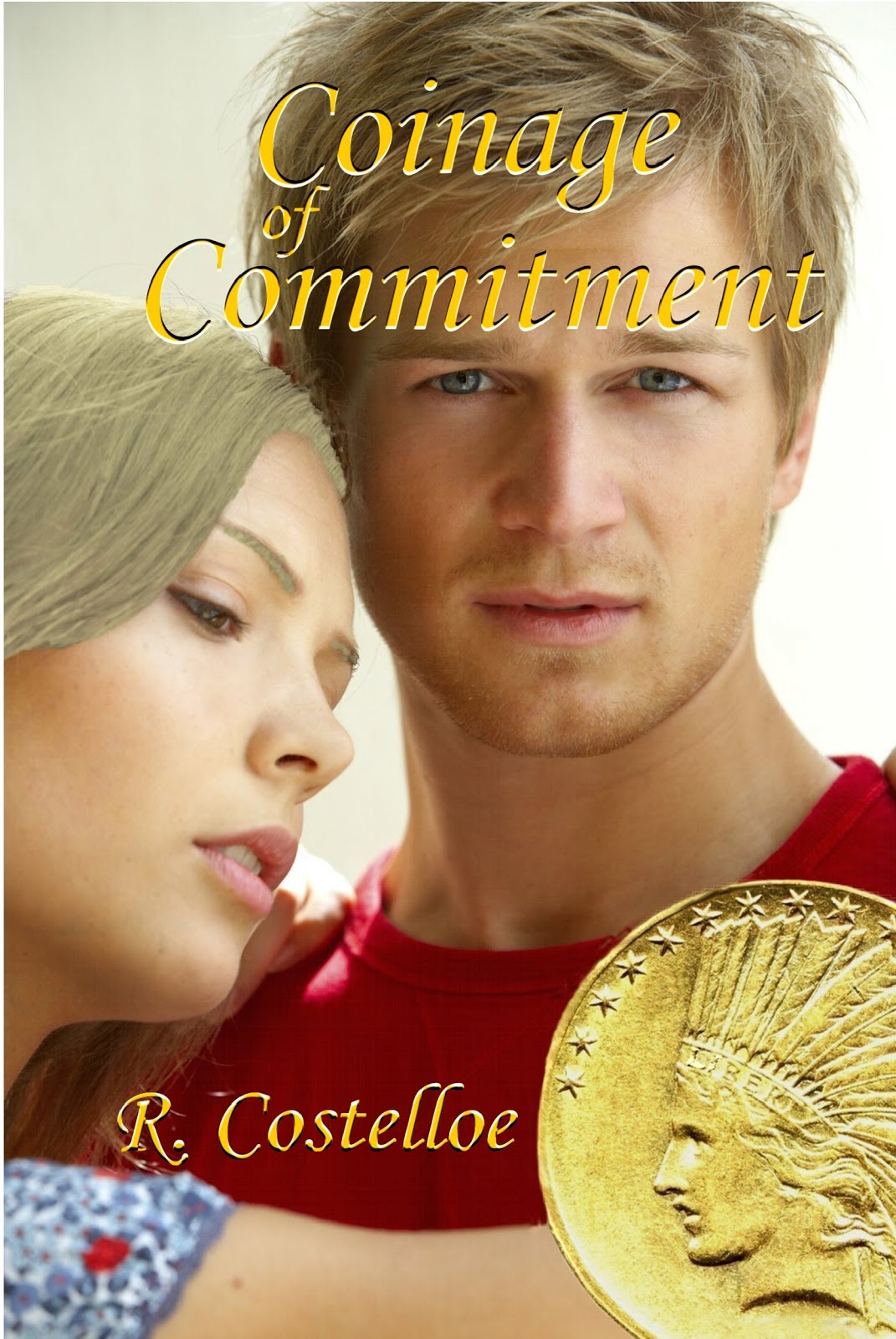
Wayne and Nancy grow up on opposite sides of the country, each certain they must have love better than what others will settle for. Something stronger, something richer, something worth searching for. During the turbulent nineteen-sixties, they meet while he is attending blue-collar Drexel, and she is at neighboring, Ivy League Penn. Although irresistibly drawn to each other, they must overcome obstacles posed by the class and social differences separating them, as well as opposition from both families, and later, a twist of fate that will be the cruelest test of all. Can they reach the emotional heights they seek? Can they overcome time's downward pulling inertia? Coinage of Commitment is dedicated to all who ever paused and wondered about the altitude love might soar to.
Available from Amazon
And from Barnes & Noble
More blog hop stops are listed below. and don't forget to enter the Giveaway.
a Rafflecopter giveaway
Friday, April 19, 2013
A Surprise Benefit From Contest Judging
Actually, the title of this post is an understatement. I was more than surprised. So let me explain. In 2007, Saga Books print published my first novel, Coinage of Commitment. The book sold well, considering that Saga is a small independent, and I had to self-power all the promo. When it finaled in the National Indie Excellence 2008 Book Awards, I naively assumed the distinction would help me get my second title, Pocket Piece Cameo, published by a major. It didn’t, and the book was eventually published by Saga in November of 2008. My experience with Cameo was disheartening and, since I was blocked on plotting a third novel, I decided to quit fiction writing.
But I hated the thought of letting all those writing skills atrophy. Looking around at volunteer opportunities, I thought maybe contest judging might be a way to preserve my skills, at least partially. Plus I’d be learning a new skill; plus I’d be giving back to the writing community I’d been a part of since 2005.
I took a course given by the Iowa RWA, and gave judging a try. It turned out to be a good fit. The RWA chapter contests were always eager for trained judges—especially those who were authors—and I enjoyed the work. Well, this is one of those endeavors where responding well earns you requests for more work. By the end of 2011, I had judged more than twenty contests that year. I did a tally, and figured I had spent something in the range of 800-1000 hours judging that year. In case you’re wondering, that’s nearly equivalent to a twenty hour a week job.
I planned to continue judging at a high pace, but then something profound happened in the spring of 2012. I came to the surprise realization that my writing skills were actually higher than they were in 2008. Unexpected, to be sure, and hard to believe, at first, but the verification was in the level of judging I was doing and documenting. Well, this revelation collided head-on with a special quality inherent to Coinage of Commitment. Because from a writer's standpoint, Coinage is a perfect storm of a story, with so many of the character and plot elements harmonizing to form a kind of narrative synergy. One that's rare. Now, perhaps there are writers gifted enough to consistently produce such stories by their own creative flux, but I am not one of them. I’ve written three novels—not all that many—but enough to teach me that Coinage's magic is one of the profoundest gifts I've ever stumbled upon--although I will take credit for the surprise ending. So when I turned around and realized my writing had reached a new...maturity, I knew almost immediately I would rewrite Coinage. Cameo too, but it was never the driver. If I'd been given the wherewithal to take a book that was already a perfect storm of a story, one that finaled in a national contest, and rewrite it into something substantially better, then the effort was mandatory.
But of course the effort turned out to be more than I bargained for. It took seven months of full-time work to rewrite both books to the limit of my new skills. The digital editions were professionally formatted, and they went up on Amazon in January of this year.
The bottom line message is that if you’re looking to improve your writing, contest judging may be worth considering.
Friday, April 12, 2013
In What Way Does Your Writing Define You?
I got this question from a fellow author and blogger, and it made me think. Yes, authors do tend to define who they are and what they think and believe in their writing. How can they avoid it? Well, I guess they could avoid it if they tried. Reporters of yesteryear tried hard to write so that their views were invisible. But today, unless you're writing formula fiction, you are probably defining yourself in your writing, at least to a certain extent.
My approach to writing romance fiction starts with a proposition. Or I guess it’s really a question. Wouldn’t it be a nicer world if people could remain enthusiastic about the romantic commitment they’ve chosen to fill the rest of their lives? No, I’m not talking about those breathtaking days of courtship. Everyone is in heaven at that brief stage. And I’m not referring to the months after marriage or move-in that define the “honeymoon” period. Rather I’m talking about after that, after parenting and career pressures pulverize so many married romances into a mush that’s humdrum at best, uptight or failing at worst. What if you had characters who look around at the average for relationships in our culture and decide they want something better? They want something better for the courtship period, yes, something stronger, something higher than what others will settle for. Plus they want it to go on being better; they want it to stay vibrant for decades after marriage, instead of just months. Well, even in fiction, mere wishing won’t do it. Our characters are going to have to do something different than the rest of us, otherwise they’ll end up with the same humdrum outcome. They’re going to have to plan for what they want. In order to make love better and longer lasting, they’re going to have to understand its nature: what can make it better, what will make it fall short?
But analyzing and understanding love’s potential is only the starting challenge for our characters. For if they’re smart enough, they’ll realize that the stratospheric love they yearn for is not going to be feasible with just anyone. No, it’s only going to be possible with someone who shares the same dream, who’s willing to plan and sacrifice and work for it just as hard. How do you find such a soul mate? How do you verify that it’s really them? This process of searching and refining is the point where the plot possibilities get really interesting. Now if you add to the plot mix a love triangle of epic drama, one featuring rival paths to the stratospheric love we are seeking, and if you bring that triangle through a surprise ending of shattering impact, one both unique and cathartic, then we should have the potential for a very special story indeed. And unlocking that exact story potential is what I’ve tried to achieve in the second edition of my novel, Coinage of Commitment.
Saturday, April 6, 2013
Gratitude: the Romantic Sentiment that Gets No Respect
This post originally appeared on Books, Books, the Magical Fruit on 3/26.
My books feature characters who want more from love that what they see all around them. Something stronger, something higher, something worth pursuing. Part of that pursuit is usually an effort to understand love. We can’t make it soar higher or make it last longer unless we figure out how it works and what can harm it. This usually means the characters need to take a thinking as well as an emotional journey to attain the emotional altitude they seek. And this opens up all sorts of plot opportunities to explore. But regardless of the type of romance being composed, writing love stories requires the author to analyze the different types of emotions that blend together to define a relationship. Every relationship is unique, so the blend of emotions is just as unique.
I’ve always been fascinated that certain motivations in that possible blend of romantic feelings get discounted because they’re thought inferior or contaminating. Marrying for money probably tops the list and, from a qualitative standpoint, is probably one that most readers would agree on. But gratitude is another attribute often named as invalidating the integrity of a relationship. “She only married him out of gratitude,” is heard from the TV soap opera as a signal that the romance is facing certain doom in future episodes.
But does gratitude really deserve such a bad rap? We may want to take another look, because gratitude can be viewed as verification from the past that a lover can be counted on in the future. Yes, I think gratitude creates faith in its object for a victorious future. And gratitude is often the very basis for our best romantic memories.
In fact, I think it’s fair to turn the question completely around. Can any successful relationship that’s mature function without it? Can you show me a successful relationship where the lovers are not grateful to each other, and in manifold ways? If your lover takes care of many little things that matter to you, isn’t that something to be grateful for? And isn’t that gratitude bound to feed the relationship in a way that will make it richer and deeper? I see mainly good things coming out of a relationship that’s laced with gratitude. And the more, the better. Show me a relationship that’s healthy and vibrant, and I’ll show you lovers who have grateful memories.
My books feature characters who want more from love that what they see all around them. Something stronger, something higher, something worth pursuing. Part of that pursuit is usually an effort to understand love. We can’t make it soar higher or make it last longer unless we figure out how it works and what can harm it. This usually means the characters need to take a thinking as well as an emotional journey to attain the emotional altitude they seek. And this opens up all sorts of plot opportunities to explore. But regardless of the type of romance being composed, writing love stories requires the author to analyze the different types of emotions that blend together to define a relationship. Every relationship is unique, so the blend of emotions is just as unique.
I’ve always been fascinated that certain motivations in that possible blend of romantic feelings get discounted because they’re thought inferior or contaminating. Marrying for money probably tops the list and, from a qualitative standpoint, is probably one that most readers would agree on. But gratitude is another attribute often named as invalidating the integrity of a relationship. “She only married him out of gratitude,” is heard from the TV soap opera as a signal that the romance is facing certain doom in future episodes.
But does gratitude really deserve such a bad rap? We may want to take another look, because gratitude can be viewed as verification from the past that a lover can be counted on in the future. Yes, I think gratitude creates faith in its object for a victorious future. And gratitude is often the very basis for our best romantic memories.
In fact, I think it’s fair to turn the question completely around. Can any successful relationship that’s mature function without it? Can you show me a successful relationship where the lovers are not grateful to each other, and in manifold ways? If your lover takes care of many little things that matter to you, isn’t that something to be grateful for? And isn’t that gratitude bound to feed the relationship in a way that will make it richer and deeper? I see mainly good things coming out of a relationship that’s laced with gratitude. And the more, the better. Show me a relationship that’s healthy and vibrant, and I’ll show you lovers who have grateful memories.
Subscribe to:
Posts (Atom)